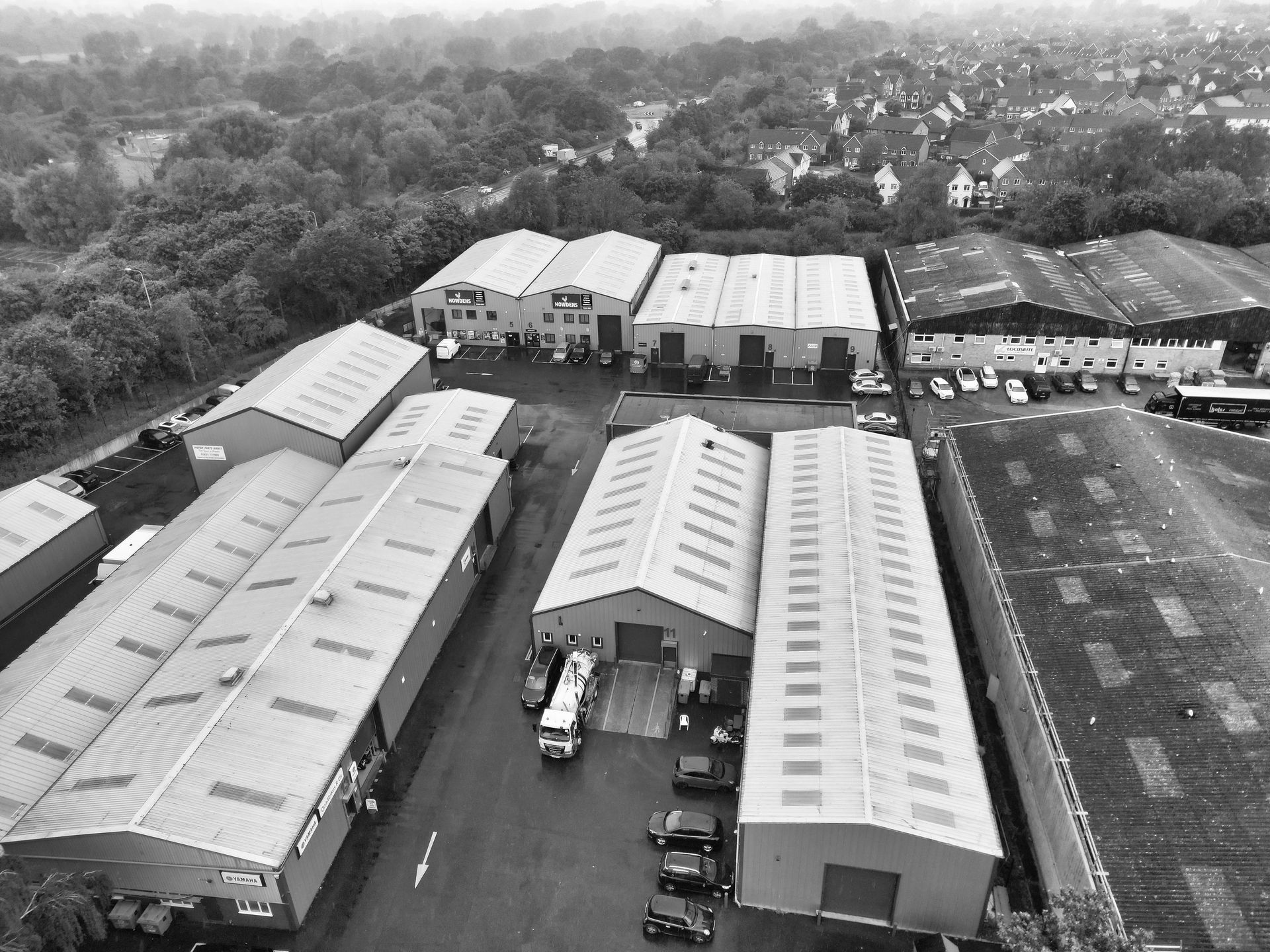
For years, landlords were told to plan for EPC C by 2027 and EPC B by 2030. That has changed. In June 2026 the government confirmed a narrower approach, and for many industrial landlords in Lancashire the pressure has eased.
The rule today
Under the Minimum Energy Efficiency Standards (MEES), you cannot grant a new lease of a commercial property rated F or G. Since April 2023 the same applies to existing leases, so a property already let must also meet EPC E. Breaching the rules can lead to fines of up to £150,000.
What changed in June 2026
On 18 June 2026 the government published its interim response to the 2019 and 2021 consultations. In short:
- The EPC C milestone for 2027 has been dropped.
- EPC B from 2031, but only for privately rented buildings over 1,000 sq m (about 10,760 sq ft), and only where improvements are cost-effective.
- Buildings of 1,000 sq m or less stay at EPC E, with no new deadline.
None of this is law yet. Regulations still need to be made, and the detail on cost-effectiveness and exemptions is still to come.
What it means for your unit
- Unit under 10,760 sq ft: you need EPC E or better now. No new target has been announced.
- Unit over 10,760 sq ft: you need EPC E or better now, and should plan for EPC B from 2031, where cost-effective.
- Open storage land with no building: usually no EPC is needed. Check any site offices or welfare cabins.
Most multi-let estates in East Lancashire are made up of units under 10,000 sq ft. For those, the main task is making sure every unit meets E now, and keeping EPCs in date. An EPC lasts 10 years.
Why it still pays to improve
Even where the law doesn't require it, a better EPC helps. More occupiers ask about energy costs, and larger firms often have their own targets. Simple upgrades like LED lighting, better roof insulation and efficient heating to the office space can lift a rating by a band. They are best done between lettings, when the unit is empty.
What to do next
- Check the EPC rating and expiry date for every unit you own.
- Get an up-to-date EPC for any unit rated F or G, or close to the boundary, before re-letting.
- For units over 1,000 sq m, ask an assessor what it would take to reach B and roughly what it would cost.
- Plan the work around lease ends so you aren't working around a tenant.
If you'd like us to review the EPCs across your portfolio, or advise on what an upgrade would do for rent and letting time,
book a free property assessment with the Blackburn team.
Related guides: Commercial EPC requirements for landlords,
How to let an industrial unit and
Asset management